

TL;DR
Modular construction does not remove every project risk. It can, however, reduce some of the most expensive and frustrating sources of volatility in commercial development, especially schedule drift, weather exposure, field coordination issues, and phased rollout complexity.
-
- Off-site fabrication shifts more work into a controlled environment, which can improve schedule certainty.
- Earlier design lock helps reduce field conflicts and late-stage changes.
- Repeatable modular systems can lower execution risk across phased or multi-building projects.
- Modular works best as a delivery strategy tied to planning and sequencing, not as a guaranteed shortcut.
Why Risk Mitigation Matters In Commercial Development
Most commercial projects do not go sideways because of one dramatic failure. They lose time and budget through smaller problems that stack up: delayed site work, trade coordination issues, weather interruptions, inspection timing, late design revisions, and installation conflicts that show up at the worst possible moment.
For developers, risk mitigation is not about finding a method that makes construction effortless. It is about choosing a delivery model that reduces avoidable uncertainty. That is where modular construction becomes strategically useful.
In a traditional project, most work happens outdoors and in sequence. In a modular project, a large share of the building scope moves into a controlled production setting. That does not eliminate risk, but it can make more of the process measurable, coordinated, and easier to manage before the building reaches the site.
Schedule Risk Is Usually The First Conversation
Schedule volatility is one of the biggest financial risks in commercial development. Delays can affect financing timelines, tenant commitments, staffing plans, opening dates, and revenue forecasts. That is why many developers first evaluate modular construction through the lens of schedule certainty.
The Modular Building Institute notes that modular projects can be completed faster than traditional construction in the right conditions because site work and factory fabrication can happen in parallel, and because most of the building work is completed indoors before delivery. That parallel workflow matters because it reduces dependence on a strictly sequential field schedule.
ROXBOX frames project delivery in a similarly structured way through ROXBOX’s four-step process. When the sequence is visible early, developers can plan around milestones instead of reacting to field surprises.
Weather Delays And Site Disruption Are Real Risk Categories
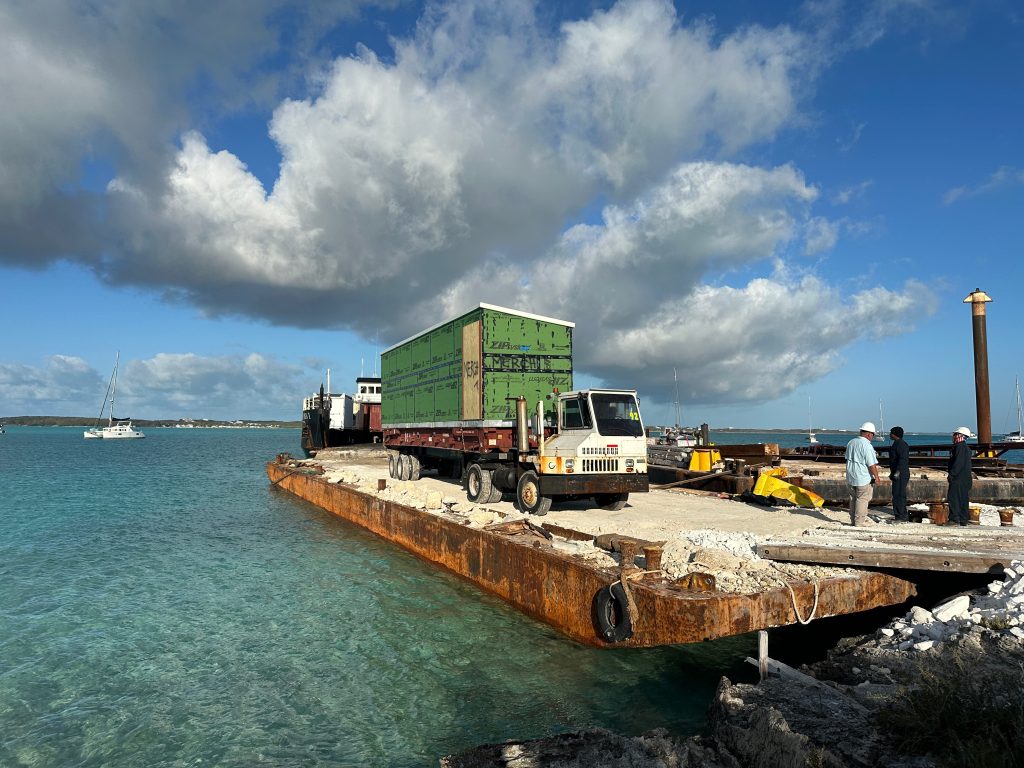
Weather is not just a jobsite nuisance. It is a real project risk. Rain, snow, temperature swings, and poor site access can affect material handling, labor productivity, inspections, and downstream sequencing.
Off-site modular manufacturing reduces part of that exposure by moving major assembly work indoors. That controlled environment is especially valuable when a project has a narrow opening window, a phased launch, or a site where prolonged field activity creates operational disruption.
It also changes the role of the site. Instead of being the place where every trade builds from scratch, the site becomes the place where foundations, utilities, access, installation, and final connections need to be ready on time. That is still demanding, but it is often a more manageable risk profile.
Earlier Design Lock Can Reduce Field Coordination Problems
Many delays in commercial construction come from coordination failures. Structural, mechanical, electrical, plumbing, and architectural systems do not always line up perfectly once work starts in the field. When those conflicts surface late, the result is usually rework, redesign, and schedule slippage.
Modular construction pushes more of that coordination upstream. Because modules must be fabricated, transported, and installed within defined constraints, the project team usually has to resolve more decisions earlier. That can feel more demanding on the front end, but it often reduces improvisation later.
For developers, that matters because earlier engineering alignment creates a clearer distinction between what is still flexible and what is already committed. It is one of the biggest reasons modular can reduce execution risk on well-scoped commercial projects.
Repeatability Lowers Risk Across Phased Or Multi-Building Programs
Risk mitigation becomes even more meaningful when the project is not a single building. Retail rollouts, hospitality expansions, restaurant programs, and phased developments often benefit from repeatability more than any one-off structure does.
Once the design logic, module family, engineering assumptions, and installation sequence are working, the team has a better foundation for the next phase. That reduces decision fatigue and lowers the chance that each new building becomes a fresh coordination exercise.
This is why developers should evaluate modular as a delivery strategy, not just a building type. The question is not only whether one structure can be modular. The better question is whether the broader program gains more schedule control, more repeatability, and fewer avoidable disruptions.
Modular Does Not Remove All Risk

A credible modular conversation has to be honest about limits. Modular construction does not guarantee approvals, eliminate site problems, or make every project faster. Foundations, utilities, transport planning, crane access, jurisdictional reviews, and installation readiness still matter.
A poorly coordinated modular project can still suffer delays if the site is not ready, if the design is immature, or if delivery logistics are underestimated. That is why modular should not be sold as a shortcut promise.
The practical value is more specific: modular can reduce certain categories of risk when the project is a good fit and when the delivery team coordinates early. For commercial developers, that is the real advantage.
How ROXBOX Fits This Conversation
ROXBOX is most relevant when a developer needs a modular construction partner that connects design, engineering, fabrication, logistics, and installation planning instead of splitting those responsibilities across disconnected vendors. In that context, ROXBOX modular buildings and the company’s public process materials support a clearer handoff path from concept through installation.
A stronger evaluation question is not whether modular removes all project risk. It is whether your project would benefit from earlier coordination, factory-based production, and a more controlled path to delivery. That is the right moment to contact ROXBOX or request a quote based on your site conditions, schedule goals, and deployment plan.
Frequently Asked Questions
Author’s Bio
Anthony Halsch is the Founder & CEO of ROXBOX and a recognized authority in modular construction, steel frame modular buildings, and custom container structures. He writes about commercial modular building strategy, design, and real-world deployment for developers, operators, and project teams.Factory-built construction changes how quality control is managed in commercial projects. By shifting a large share of work into a controlled manufacturing environment, modular construction can improve inspection consistency, reduce weather-related variability, and create more repeatable production workflows than traditional site-built construction.