


Designing Hybrid Modular + Traditional Construction Projects
TL;DR
A hybrid modular construction strategy does not force a project into all-modular or all-site-built thinking. It lets developers decide which parts of the building benefit from factory production and which parts still make more sense in the field.
- • Hybrid delivery is often a practical middle ground.
- • Repeatable spaces usually make the best modular candidates.
- • Custom podiums, cores, and site-driven elements may stay site built.
- • The value depends on clean early coordination.
Why Hybrid Delivery Matters
Developers do not always need an entire project to be modular in order to gain real value from off-site construction. In many commercial programs, the better move is to separate the building into parts that benefit from factory production and parts that are more practical to build on-site. That is the core idea behind a hybrid modular construction strategy.
This matters because many projects have mixed conditions. A site may support a conventional podium, deep foundations, or a highly customized ground-floor interface, while upper-floor units, guest rooms, offices, or equipment rooms may be far more repeatable. Hybrid delivery gives the team room to match the method to the building instead of forcing the building to match the method.
What Usually Stays Modular
The most natural modular candidates are usually the spaces with repeatable geometry, predictable systems, and a strong need for quality control or schedule compression. Guest rooms, residential units, standardized commercial rooms, restroom blocks, support buildings, and some equipment enclosures often fit that profile.
The latest AIA-NIBS Modular and Off-Site Construction Guide explains that off-site and modular methods can capture manufacturing efficiencies without giving up architectural intent. That logic is useful in hybrid projects because it supports selective modularization rather than an all-or-nothing approach.
In practical terms, the repeatable parts of the project are often the easiest places to start. If the room type or enclosure repeats, the chances improve that modular fabrication can create real gains in quality, coordination, and timing.
What Often Stays Site Built
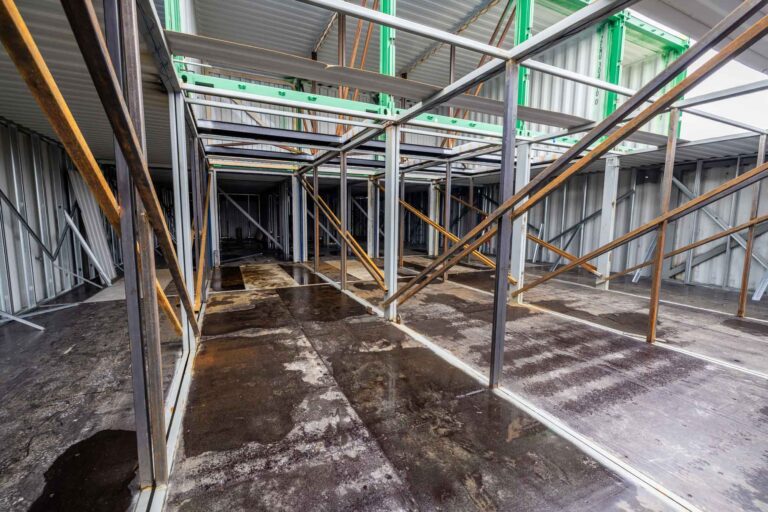
Hybrid projects still rely on conventional construction for many important elements. Foundations, podiums, parking structures, vertical cores, unusual spans, custom public areas, and site-specific utility work often remain site built because they are too tied to local conditions or too customized to benefit from volumetric production.
That does not mean those site-built components compete with the modular strategy. In a good hybrid plan, they support it. The field-built portions create the base conditions the modular portions need in order to arrive, connect, and perform correctly.
The Main Advantage Is Fit, Not Purity
One of the biggest mistakes in modular planning is assuming the goal is to maximize modular percentage at all costs. For many developers, the better goal is to create the most buildable combination. Hybrid delivery is valuable because it lets teams stay practical. If a podium should be site built, it can be. If upper-level units or support spaces should be modular, they can be.
The NIBS Building Offsite introduction also reinforces that off-site construction changes production, management, and coordination logic, not just component location. That is especially true in hybrid projects, where the interface between factory work and field work is the real challenge.
In other words, hybrid modular construction strategy is less about ideology and more about interface design. The question is not which method wins. It is how the methods work together.
Coordination Is Where Hybrid Projects Succeed Or Fail
Hybrid projects can create strong outcomes, but they also raise the stakes for early coordination. Structural connections, tolerances, utility interfaces, sequence planning, transport windows, and install timing all need to line up between the modular scope and the site-built scope. If those decisions come too late, the advantages of hybrid delivery can erode quickly.
Autodesk's guidance on integrated BIM workflows in modular prefabricated construction is useful here because it emphasizes that the digital model becomes the product in industrialized construction. That is even more important in hybrid work, where the digital model has to coordinate not only the modular scope, but also its exact relationship to the field-built portions of the project.
For developers, this is the clearest takeaway: hybrid delivery increases the value of good preconstruction. It does not reduce it.
Where ROXBOX Experience Supports The Hybrid Conversation
ROXBOX's public project and services mix already points to the kind of flexibility hybrid thinking requires. The company works across steel frame modular buildings and custom container structures, which means the public-facing portfolio spans everything from larger permanent modular environments to highly specific container-based programs.
ROXBOX's steel frame modular services and four-step process are the clearest starting points, because they show how concept design, architecture and engineering, factory build, and delivery plus installation are coordinated. That structure matters in hybrid projects where some pieces may stay site built while others move into the factory.
Projects like Coconut Club and the Denver Zoo concession stand also help show why developers often need this flexibility. Public-facing hospitality and amenity structures have to fit the larger site and guest experience, even when modular delivery is part of the solution.
When Hybrid Strategy Makes The Most Sense

Hybrid modular + traditional construction tends to make the most sense when a project has both repeatable and non-repeatable conditions. Mixed-use developments, hospitality sites, multifamily programs, phased commercial projects, and infrastructure sites often fall into that category. The site may demand a conventional base or public interface, while upper levels or support spaces are much easier to modularize.
It can also make sense when the development team wants to reduce risk by starting with a partial modular scope instead of committing the whole project to a single delivery method. For some developers, that is the path that makes modular more usable in the real world.
How ROXBOX Fits
ROXBOX designs, engineers, and builds modular construction solutions that include steel frame modular buildings and custom container structures. For developers evaluating hybrid delivery, that means ROXBOX can support the modular portion of a larger strategy while helping the team think through sequencing, interfaces, and what should stay in the field. Teams can explore steel frame modular capabilities, review how ROXBOX structures project phases, or contact ROXBOX to discuss a project that combines modular and site-built elements.
Frequently Asked Questions
Author's Bio
Anthony Halsch is the Founder & CEO of ROXBOX and a recognized authority in modular construction, steel frame modular buildings, and custom container structures. He writes about commercial modular building strategy, design, and real-world deployment for developers, operators, and project teams.Factory-built construction changes how quality control is managed in commercial projects. By shifting a large share of work into a controlled manufacturing environment, modular construction can improve inspection consistency, reduce weather-related variability, and create more repeatable production workflows than traditional site-built construction.

Designing Experiential Hospitality Spaces With Modular Structures
TL;DR
Modular hospitality design works best when the guest experience is planned first and the building system is used to support it. Architects do not need to choose between design flexibility and modular discipline, they need to decide which parts of the project should stay repeatable and which parts should feel site-specific.
- Guest flow, brand expression, and operational efficiency should shape the modular concept from the start.
- Modular works well for concessions, bars, suites, guest amenities, and resort support spaces where speed and repeatability matter.
- Architects get better results when they lock core dimensions and systems early, then use façade, materials, and layout choices to shape the guest-facing experience.
- ROXBOX supports that process with in-house design, architecture and engineering, factory production, and delivery planning.
Why Modular Fits Experiential Hospitality
Hospitality projects are judged fast. Guests notice circulation, line length, weather protection, sightlines, acoustics, and whether the space feels branded or generic. That is why modular hospitality design should never start with the module alone. It should start with the experience the operator wants to create.
That makes modular a strong fit for hospitality environments that need memorable guest spaces without dragging out field construction. ROXBOX hospitality modular structures are positioned for concessions, kiosks, lounges, and hospitality suites that need to handle heavy foot traffic, changing layouts, and seasonal surges. ROXBOX also frames steel frame modular buildings as flexible in size, layout, and finish options for hospitality and commercial spaces.
What Architects Actually Standardize
The biggest misconception is that modular forces every hospitality project into one look. In practice, the opposite is usually true. The most successful teams standardize the parts the guest does not need to notice: structural logic, utility zones, service circulation, module dimensions, and repeatable back-of-house functions.
That frees the design team to spend more energy on the parts that shape the guest experience: entry sequence, canopy coverage, glazing, bar frontage, material palette, signage integration, and the way the building sits in the site. For architects, the design move is not to standardize everything. It is to standardize what helps production and customize what the guest actually feels.
Design Collaboration Has To Start Early
Modular rewards early coordination. ROXBOX’s modular building services include concept design, architecture and engineering, code compliance, construction management, quality control, delivery, and installation. The company’s four-step process also makes the sequence clear: concept design, architecture and engineering, build, then delivery and installation.
For architects and developers, that sequence matters because hospitality spaces often carry a lot of brand and operational requirements. Service windows, point-of-sale zones, kitchen adjacencies, ADA circulation, equipment loads, and utility tie-ins need to be coordinated before fabrication starts. Early design work feels more disciplined, but it usually reduces field compromise later.
How Modular Still Leaves Room For Brand Expression
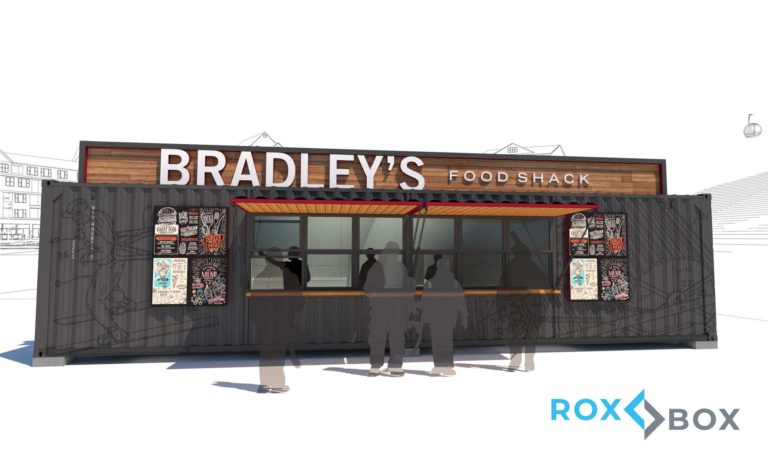
Experiential hospitality spaces do not win on speed alone. They win when the space feels intentional. Modular can support that by separating the building system from the finish language. The structure can be repeatable while the experience still feels highly specific to the venue, operator, or region.
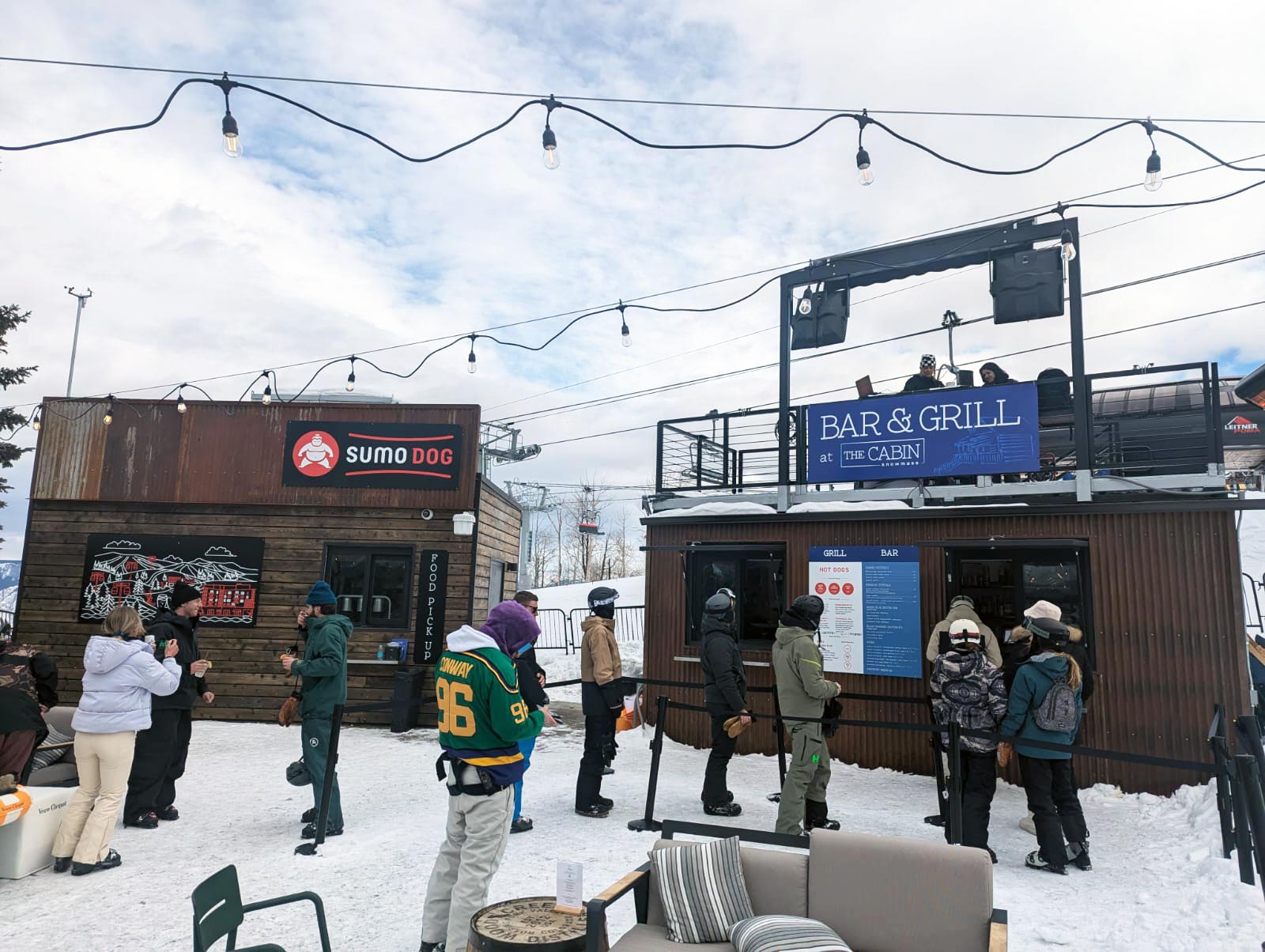
That is where architects can use cladding, roof forms, overhangs, openings, lighting, graphics, and outdoor connections to create a more distinctive identity. ROXBOX’s steel frame modular project portfolio shows that range across hospitality work, including Coconut Club, the Denver Zoo concession stand, and Aspen hospitality projects, where the built form is tied to the setting rather than treated like a generic drop-in box.
Guest Experience And Operations Have To Work Together
Hospitality developers usually need a building that does more than look good in renderings. It has to move guests efficiently, support staff workflow, and hold up under peak demand. That is one reason modular fits experience-driven environments so well. A tightly planned footprint can align front-of-house and back-of-house decisions earlier, before they become expensive job-site fixes.
Architects should pressure-test a few questions early. Where do queues form. Where does weather protection matter most. Can the bar, suite, or concession open with minimal site disruption. Which spaces need repeatability across locations, and which need more site-specific treatment. Those questions lead to better modular design decisions than simply asking how many modules fit on the pad.
Where Modular Has Real Hospitality Value
Modular is especially strong when a hospitality project needs faster deployment, phased growth, or less disruption to an active venue. MBI notes that hospitality developers are using modular construction for accelerated timelines, design flexibility, and more efficient delivery, especially in hotel and guest-focused environments. The same logic applies to resort amenities, food-and-beverage structures, ticketing, and premium guest spaces.
ROXBOX also positions modular for remote and destination hospitality settings. Its island and remote-environment page highlights hospitality infrastructure such as cafés, bars, and resort support spaces for locations where traditional construction can be harder to manage. That makes modular useful not only for design freedom, but for execution in places where schedule and logistics are part of the design problem.
Common Mistakes To Avoid

The first mistake is treating modular like a finished design answer instead of a delivery method. The second is waiting too long to involve the modular partner. The third is over-customizing the structure while under-planning the guest journey and operational layout.
A better approach is to define the experience goals early, identify the repeatable building logic, and use the modular system to support both. That keeps the project from becoming either too generic or too bespoke to build efficiently.
That is where design services matter more than many teams expect. A hospitality developer may already know the concept, but still need help translating it into a modular scope that can be priced, permitted, fabricated, and installed without losing the original design intent.
Where Design Services Add The Most Value
For hospitality architecture, the highest-value design work often happens in the translation layer between concept and execution. The design team has to decide how much of the program should repeat, how the building meets the site, where utilities and service paths sit, and which guest-facing details deserve the budget because they change how the space feels.
How ROXBOX Fits
ROXBOX fits best when a hospitality developer or design team wants one partner that can help connect brand goals, architecture, engineering, manufacturing, and installation. The company’s in-house design and A&E workflow, factory production model, and hospitality-focused steel frame modular work make it a strong fit for guest-facing spaces that need both design flexibility and execution discipline.
For teams exploring hospitality concepts, the hospitality page, modular building services, and ROXBOX’s process overview are the best starting points. When the project is ready for a real conversation, contact ROXBOX to review the site, guest-use goals, and design constraints.
Frequently Asked Questions
Author's Bio
Anthony Halsch is the Founder & CEO of ROXBOX and a recognized authority in modular construction, steel frame modular buildings, and custom container structures. He writes about commercial modular building strategy, design, and real-world deployment for developers, operators, and project teams.Factory-built construction changes how quality control is managed in commercial projects. By shifting a large share of work into a controlled manufacturing environment, modular construction can improve inspection consistency, reduce weather-related variability, and create more repeatable production workflows than traditional site-built construction.